



Photographer’s Buying Guide: Which Camera Carry System Do You Need?

The way you carry a camera changes how you work. A good carrying system keeps the camera close, leaves your hands available and remains comfortable after several hours. The right choice depends on your camera, lenses, pace and the kind of photography you practise.
Choose the system around your real workflow
There is no single best camera strap for every photographer. A compact camera used for street photography asks for something different from two professional bodies used during a wedding. Start by asking three simple questions: how many cameras do you carry, how heavy are the lenses and how quickly must you reach the camera?
Neck and shoulder straps for one camera
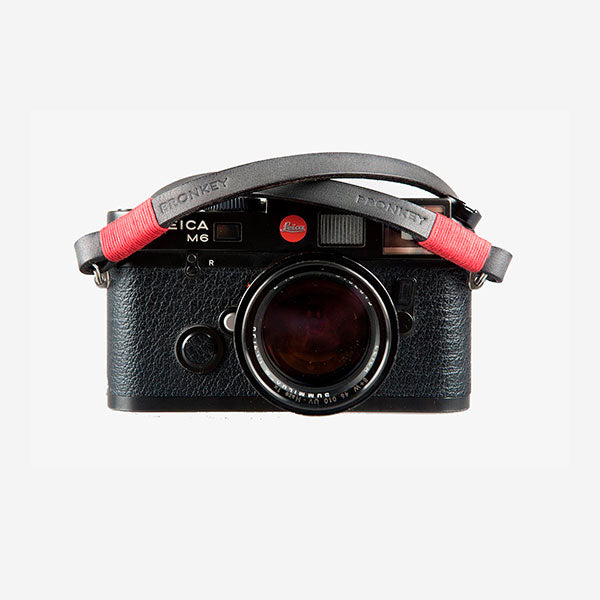
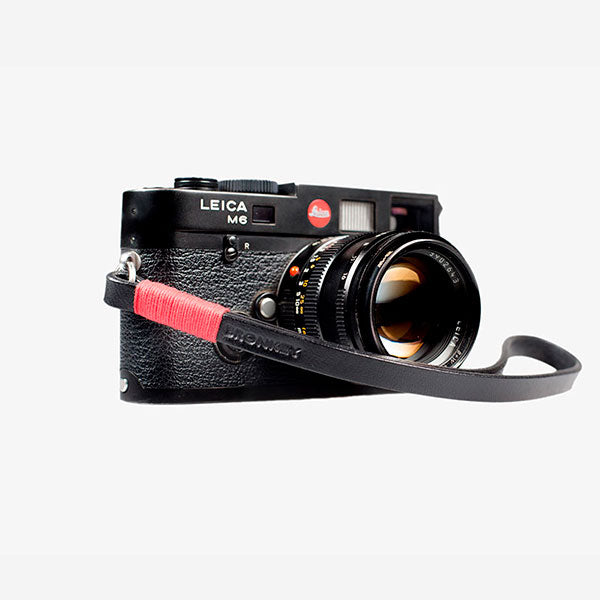
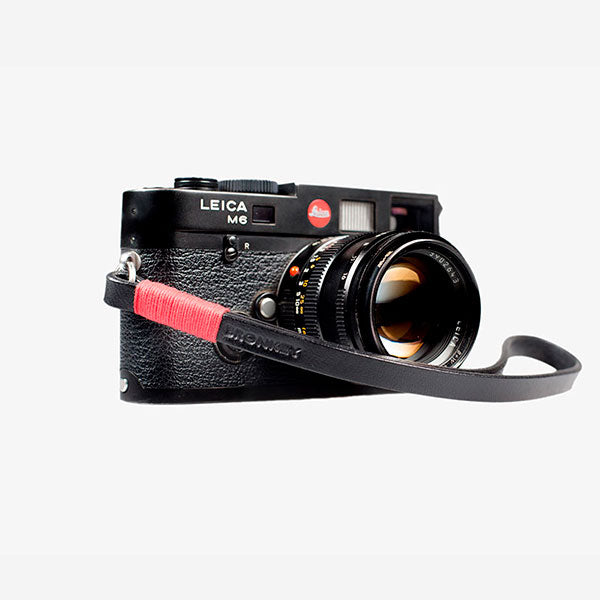
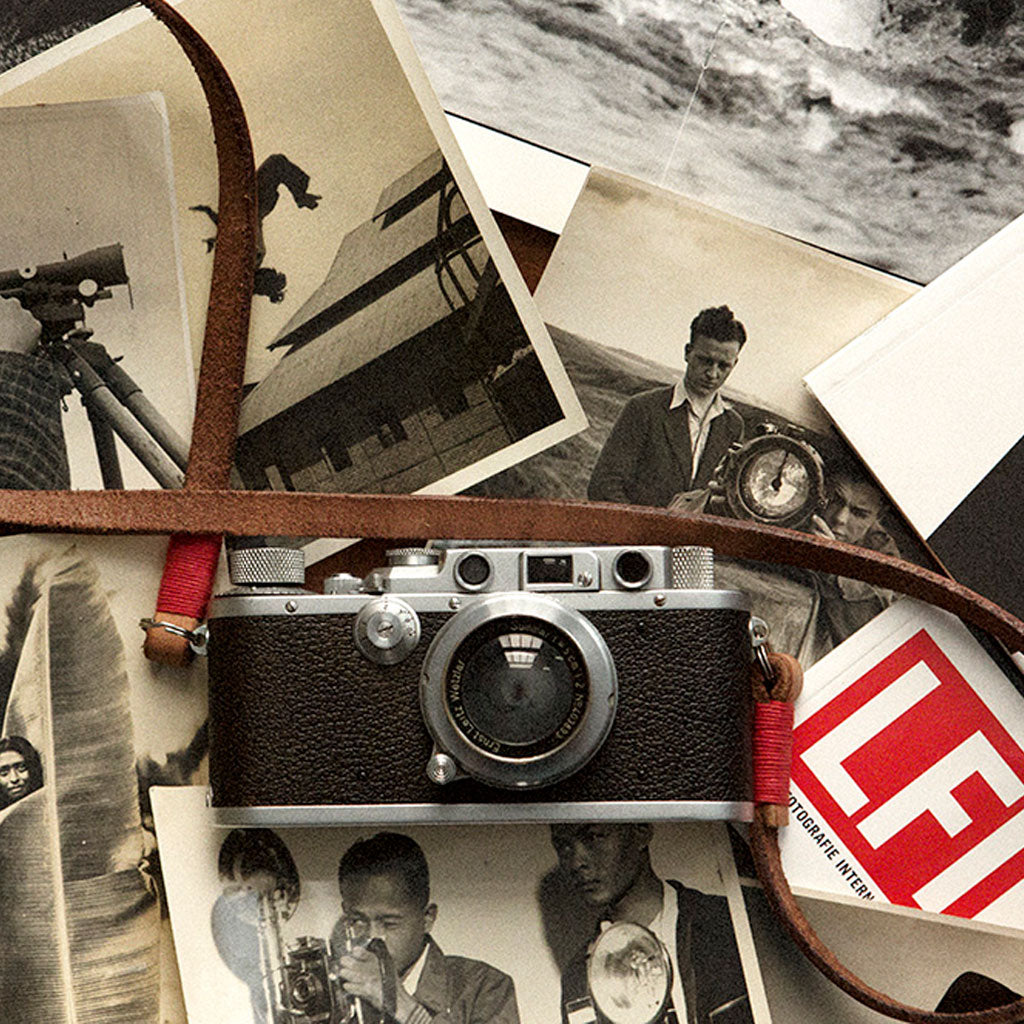
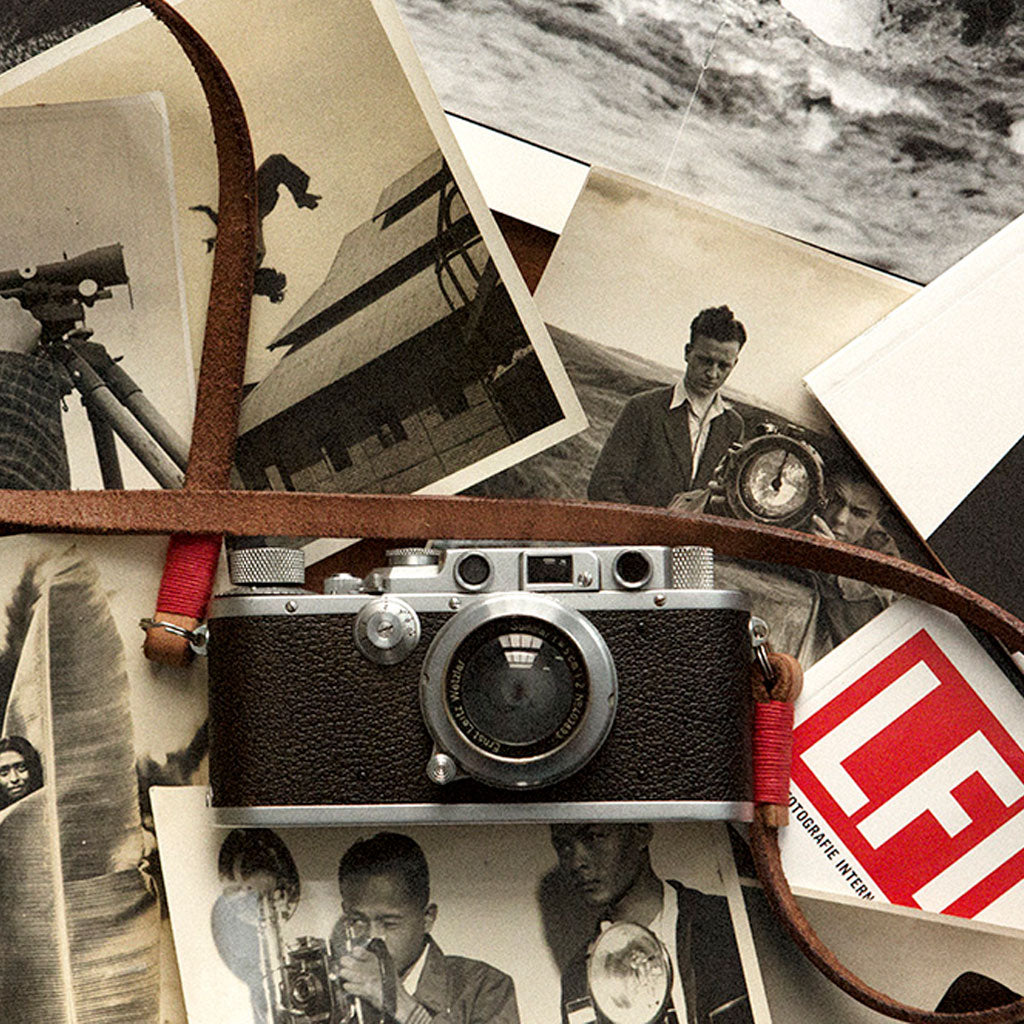
A single strap is the most versatile choice for everyday photography. It works well for travel, documentary work, street photography and analogue cameras. A leather strap can be discreet, durable and comfortable without making the equipment look technical or oversized.
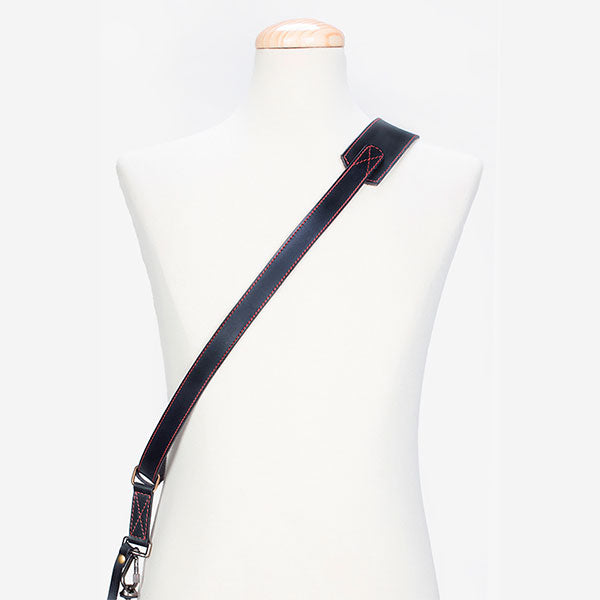
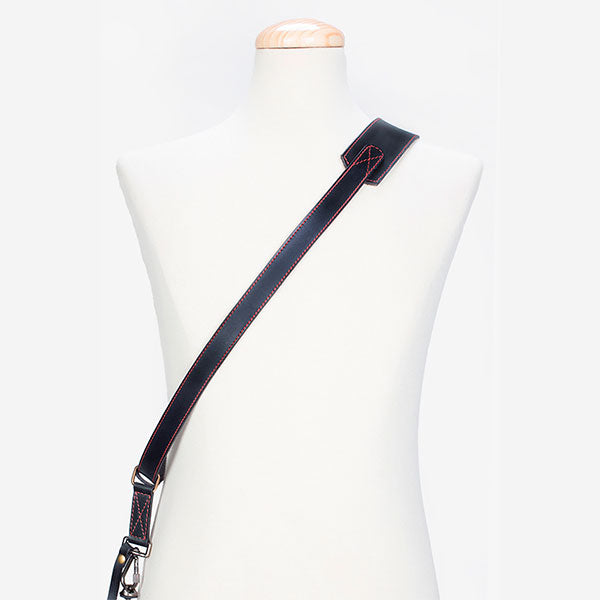
Bronkey’s camera strap collection includes different lengths, materials and designs for photographers who normally carry one body. The Tokyo #101, for example, is a practical option for a compact mirrorless or film camera. Choose the length according to where you want the camera to rest and how you normally bring it to your eye.
When a shoulder or cross-body strap works best
A cross-body position can reduce pressure around the neck and keep the camera near the hip when you are walking. It is useful when you want quick access but do not need a second body. The strap should move smoothly over clothing and keep the camera stable when you bend down or change direction.

Wrist straps for close, active shooting
A wrist strap suits photographers who keep the camera in hand for much of the session. It adds security without leaving the camera hanging from the neck. This is particularly useful for street photography, travel and small film or mirrorless cameras.
It is not a replacement for every carrying system. A wrist strap works best when the camera is already in your hand and the equipment is light enough to hold comfortably. For longer hands-free walks, a neck or cross-body strap is usually more practical. See the wrist strap collection when this is how you actually photograph.

Double camera harnesses for professional assignments
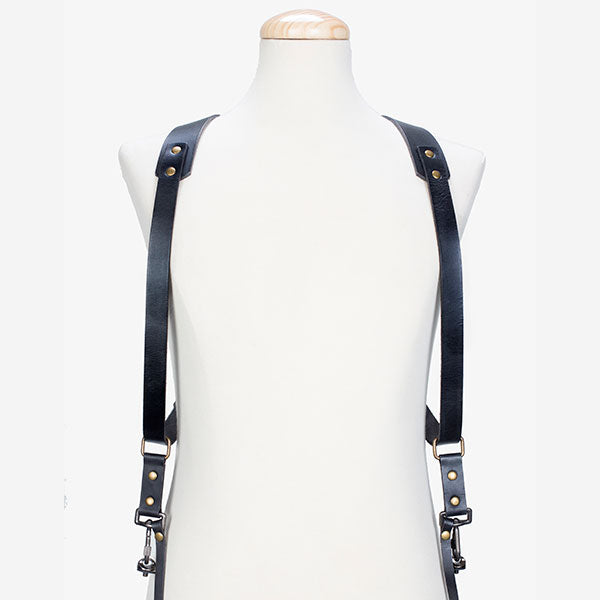
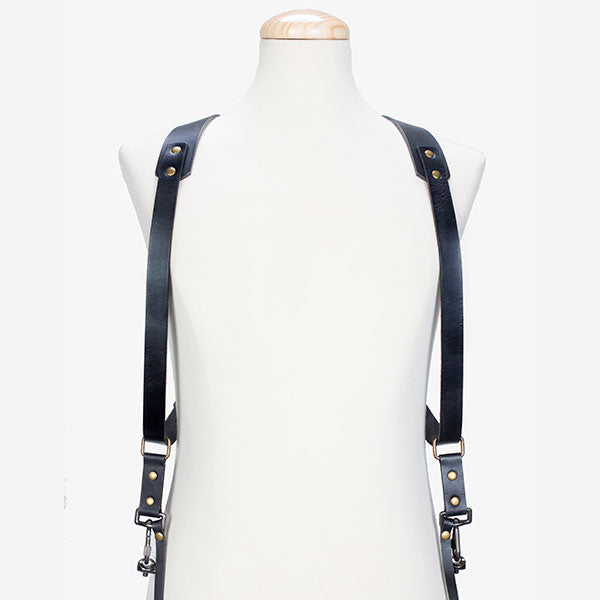
When two cameras are part of the job, a dual harness can improve both access and balance. Wedding and event photographers often prepare one body with a wide lens and another with a portrait or telephoto lens. That saves lens changes during important moments and keeps both cameras ready.
A harness distributes the load across the shoulders and back instead of concentrating two bodies at the neck. Bronkey’s double camera harnesses use a standard 1/4”-20 tripod connection, making them compatible with most Sony, Fujifilm, Canon, Nikon, Leica and film cameras. The Tokyo #703 is a dual-camera option made from premium leather with reinforced attachment points and marine-grade 304 stainless steel hardware. It is supplied in a handmade wooden presentation box.
Harness or two separate straps?
Two separate straps can work, but they often pull in different directions and become tangled when you move. A purpose-built harness keeps the cameras separated and makes the same movement repeatable. It is most useful when carrying two bodies is a normal part of the assignment, not simply an occasional backup.
Camera bags complete the carrying system
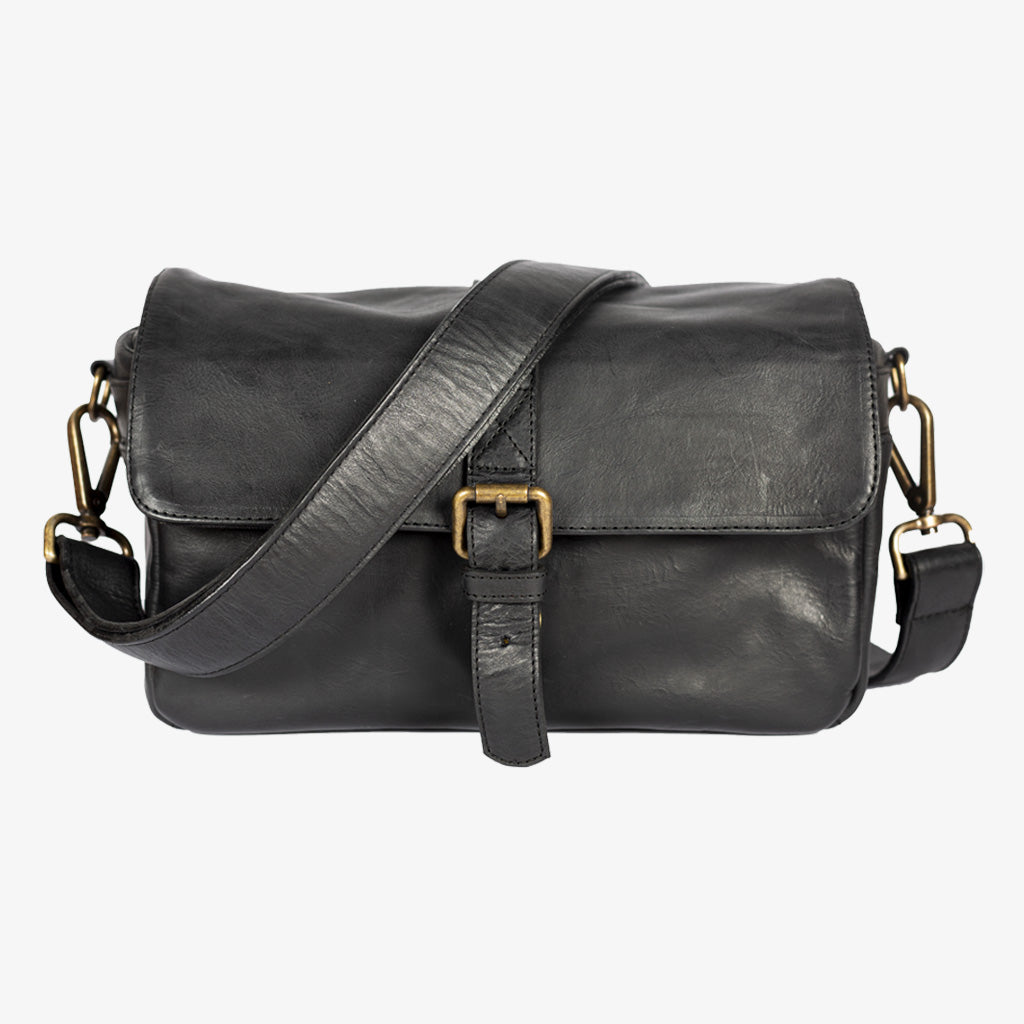
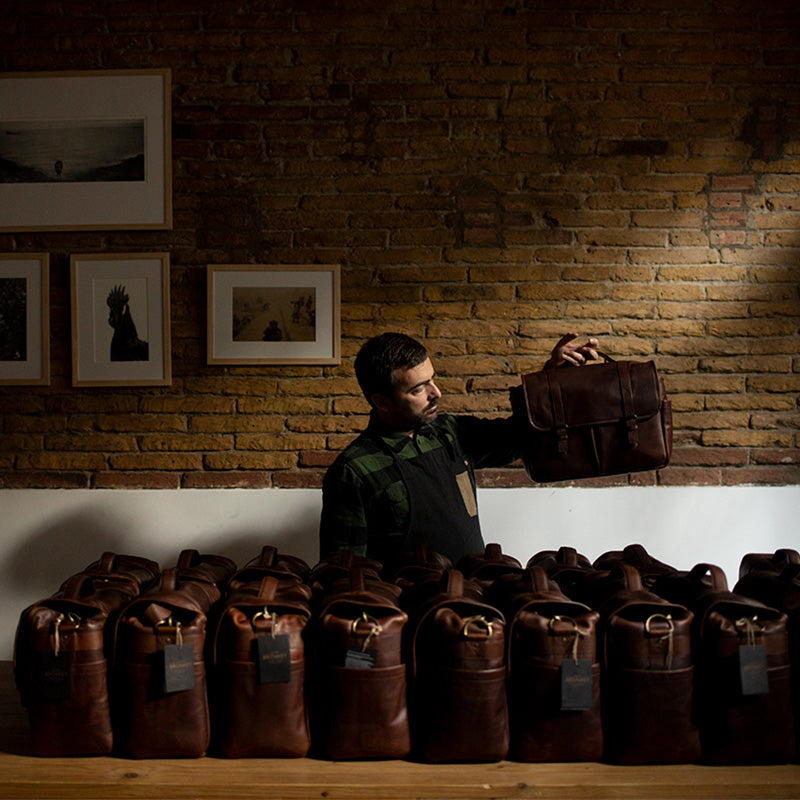
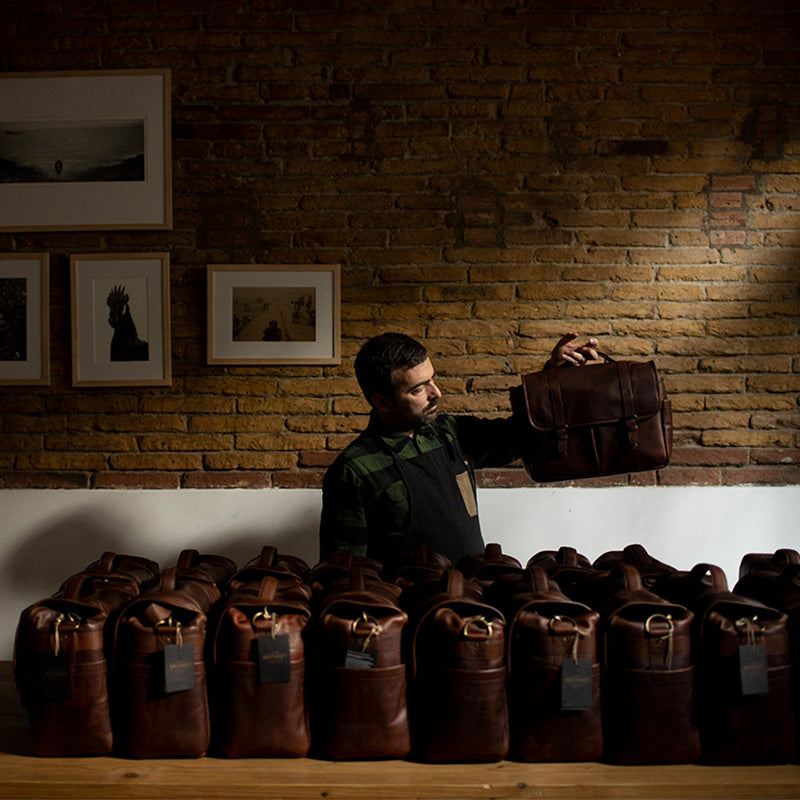
Straps and harnesses keep the camera ready. A bag protects the equipment when you are changing lenses, travelling or taking a break. A well-sized bag should hold the equipment you use, not every accessory you own. Bronkey’s camera bags are designed for photographers who value access, durable materials and a quieter visual presence.
Materials, attachment points and daily care
Leather changes with use and develops a patina. That is part of its character, but it also rewards simple care: keep it dry, avoid storing it against damp surfaces and do not overload a strap beyond the camera-and-lens combination for which it was designed. Before every session, check the attachment screw, rings and connection points. A carrying system is only reliable when those small details are maintained.
Which system should you choose?
- One compact or mirrorless camera: a neck or cross-body strap.
- One camera kept in hand: a wrist strap.
- Two cameras at weddings, events or reportage: a dual harness.
- Several lenses or a long day away: combine a strap or harness with a suitable camera bag.

Frequently asked questions
Are leather camera straps suitable for heavy cameras?
They can be, provided the strap, connection points and length are designed for the complete camera-and-lens combination. Always check the hardware before use.
Can I use a Bronkey harness with a mirrorless camera?
Yes. The standard 1/4”-20 connection is compatible with most mirrorless, DSLR and film cameras.
Should I buy a harness if I only sometimes carry two cameras?
Usually start with a single strap. A harness becomes worthwhile when carrying two bodies is a repeated part of your work.
Carry less noise into the photograph
The best carrying system becomes part of your routine without demanding attention. Choose for the way you actually photograph, look after the attachment points and let the material improve with use. Explore the Bronkey collections when you want a handmade system designed in Spain for photographers who use their equipment regularly.