

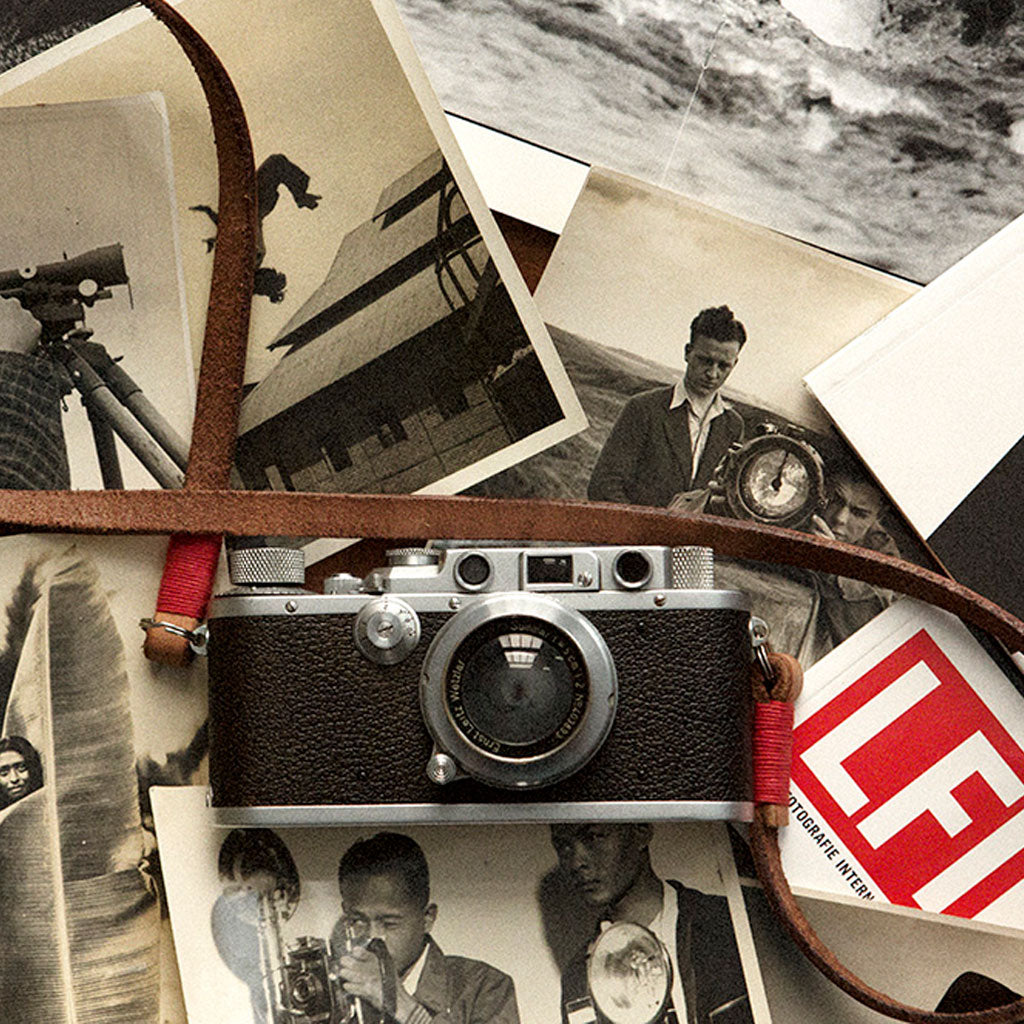
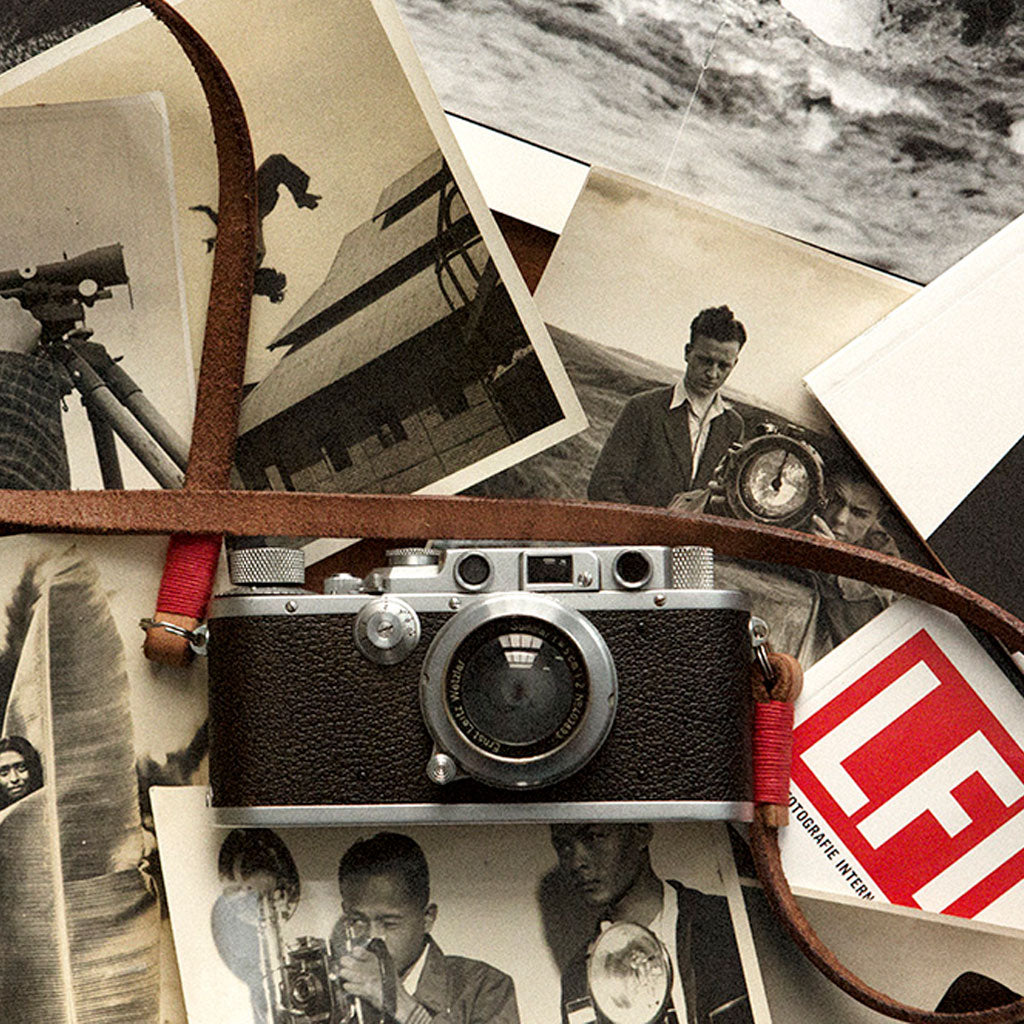


A mirrorless camera may be smaller than a DSLR, but choosing a bag for it is not simply a matter of buying the smallest model available. The body, lens, spare battery, cards and the way you move while photographing all affect what feels comfortable in real use. A bag that looks compact on a product page can become awkward if the lens points the wrong way, the divider presses against the controls or you have to empty everything to reach a battery.
This guide focuses on the decisions that matter before buying a leather camera bag for a mirrorless kit: capacity, access, protection, materials and the kind of photography you actually do.
Start with your real mirrorless kit
Place the equipment you normally carry on a table. Include the camera with its most-used lens attached, not only the body. Add one spare lens if you regularly use it, along with batteries, cards, a small cleaning cloth and any personal items that must share the bag. This gives you a more honest starting point than choosing by camera model alone.
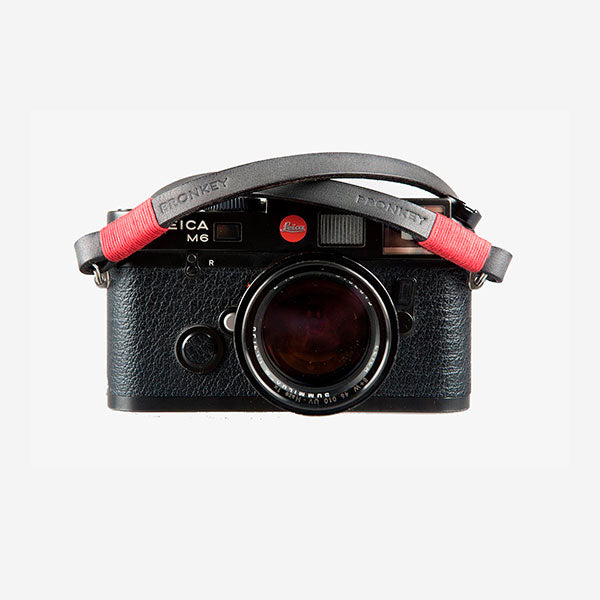
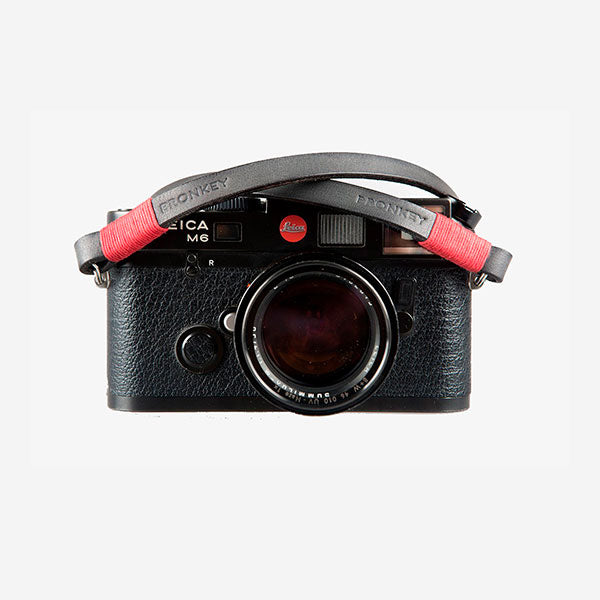
A compact rangefinder-style camera with a small prime lens needs very little depth. A full-frame mirrorless body with a fast zoom requires more room around the grip and lens. The camera may be “mirrorless”, but the complete setup can still be substantial. Measure the kit as you carry it and leave a little space for your hand to enter without scraping the camera against the opening.
One body and one lens
For street photography, daily use and short journeys, a small crossbody format is often enough. It keeps the camera close, avoids unnecessary bulk and can also hold a phone, wallet and spare battery. The advantage is not merely lower weight. A small bag encourages a deliberate kit and makes it easier to move through a city without looking as though you are carrying a large equipment case.
One body and two lenses
If you change between a standard prime and a portrait or wider lens, look for a structured interior with a movable divider. The divider should prevent the lenses from striking each other without forcing the bag into a rigid layout. Check whether the camera can remain stored with your usual lens mounted. Repeatedly removing the lens simply to make the bag fit defeats the purpose of quick access.
Choose capacity by workflow, not by volume alone
Litres and external dimensions are useful, but they do not describe how a bag behaves while you work. A tall bag may have enough volume yet place a small camera at the bottom. A wide opening can be more useful than extra capacity because it lets you see the equipment and reach it with one hand.
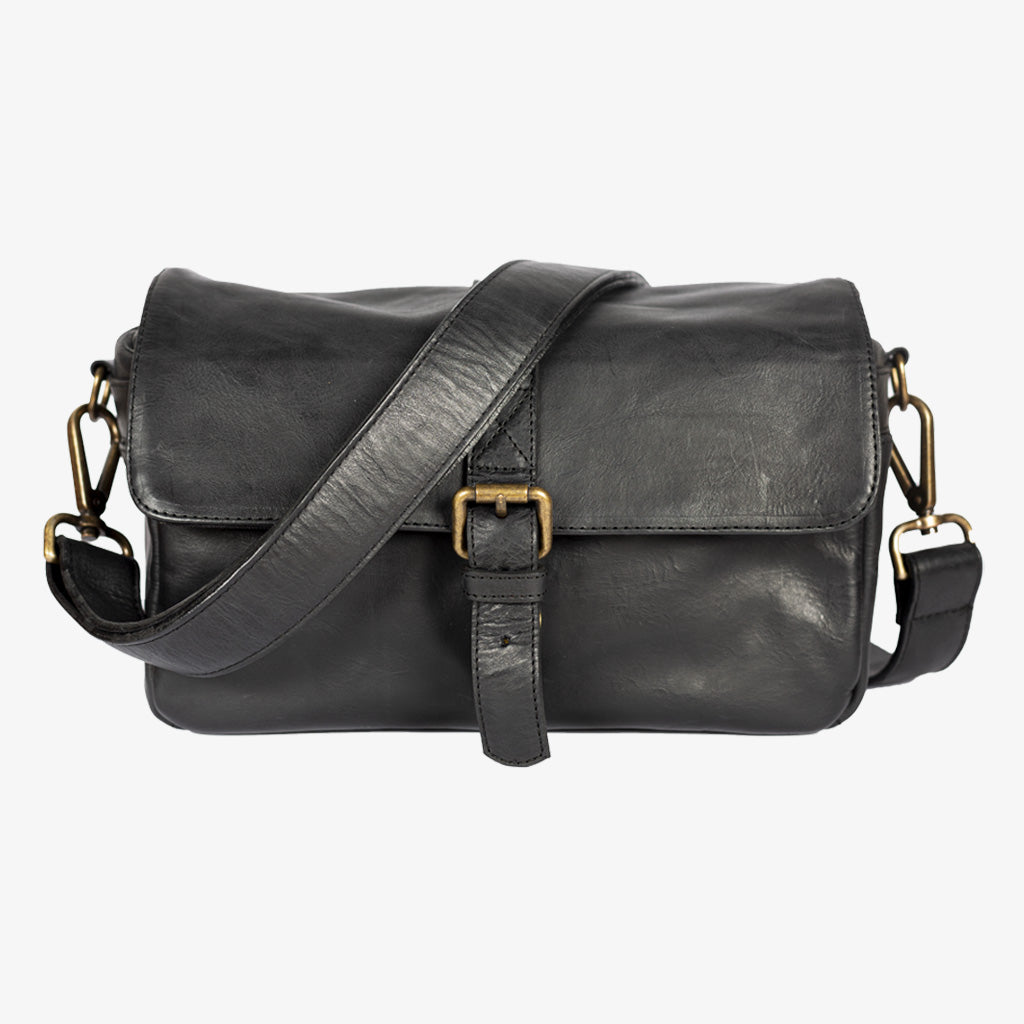
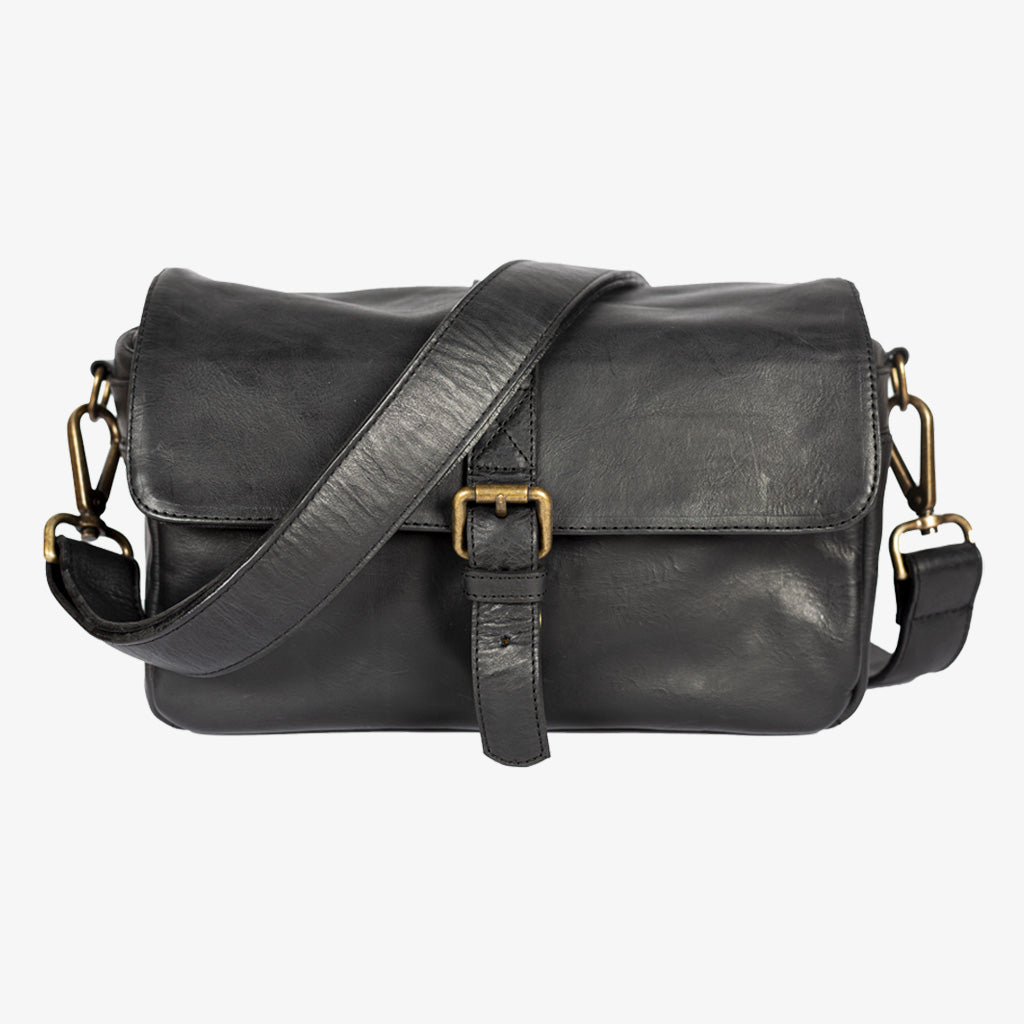
For a practical comparison, review the Bronkey camera bag collection and pay attention to each model’s proportions as well as its stated capacity. The compact Berlin format is designed around a mirrorless body with one or two lenses. Larger models make more sense when you need an additional body, larger optics or more personal items.
Protection should be present without dominating the bag
A camera bag needs enough structure to protect the equipment from everyday knocks, but excessive padding adds weight and reduces usable space. Look for a soft interior, controlled seams and dividers that stay in place. Metal hardware, buckles and zips should not sit where they can rub against the camera.
Leather, waxed canvas or a combination?
Leather offers structure, a tactile surface and an appearance that becomes more personal with use. It suits photographers who want one bag for assignments, travel and daily life. Good leather should feel substantial without being unnecessarily stiff, and the construction around the strap attachments should be reinforced because that is where the load is transferred.
Waxed canvas combined with leather is usually lighter and has a more relaxed character. It is a sensible alternative when reducing weight matters or when the bag will be used frequently outdoors. Neither material removes the need for sensible weather care. Close the bag properly, avoid leaving wet equipment inside and allow natural materials to dry at room temperature.
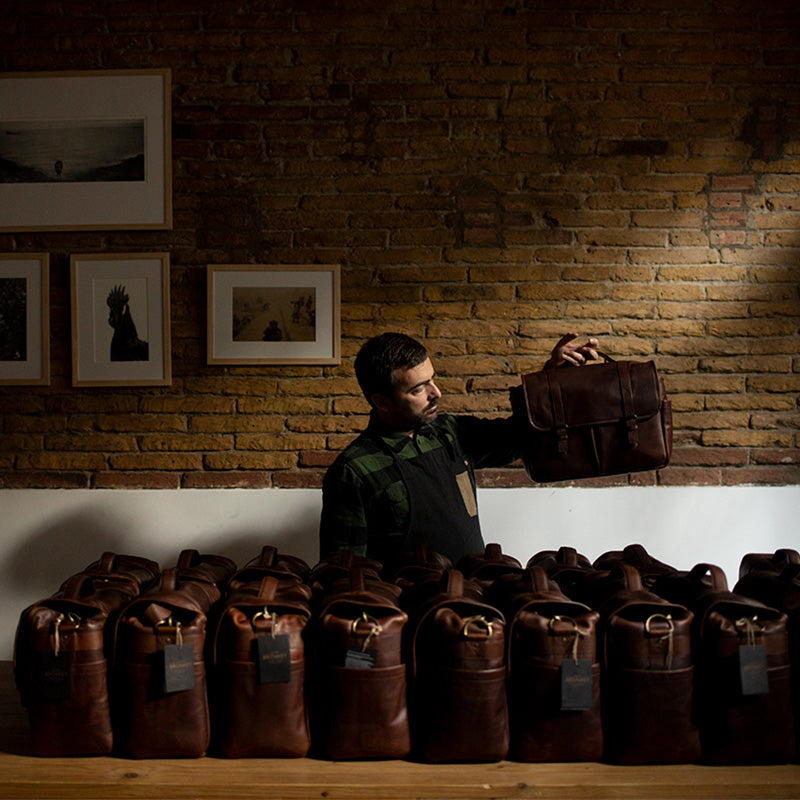
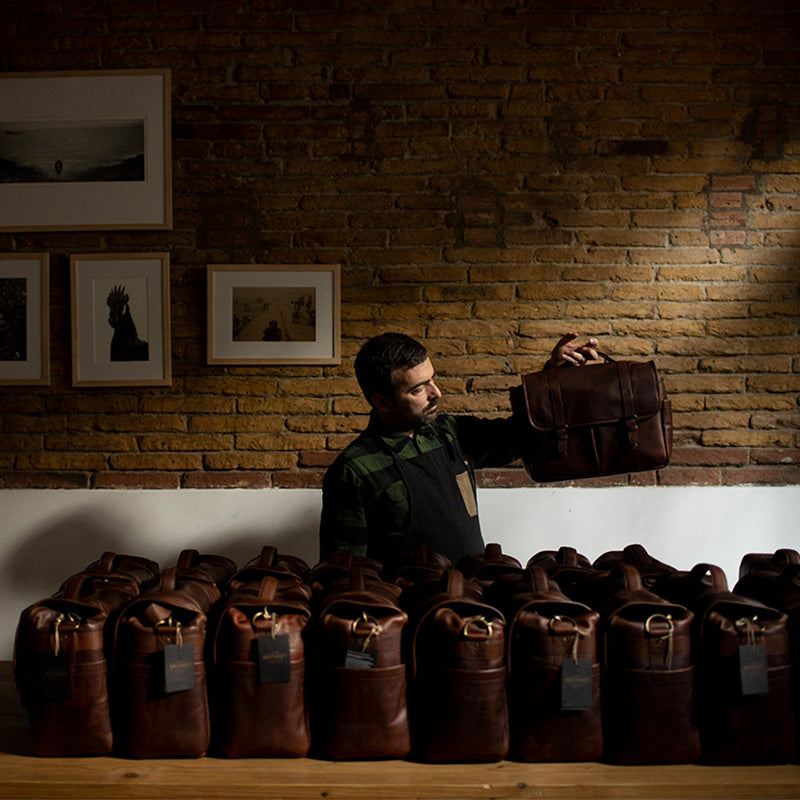
The Berlin Black Leather Camera Bag illustrates the leather option: a handmade crossbody bag made in Spain for a mirrorless camera and one or two lenses. Its discreet profile is intended to work beyond a photographic assignment, rather than looking like a technical equipment case.
Comfort is determined after the first ten minutes
A shoulder bag concentrates weight on one side, so the width and adjustment range of the strap matter. Load the bag with the actual equipment before judging it. The strap should allow the bag to sit high enough to remain controlled while walking but low enough to open comfortably. If you constantly hold it with one hand to stop it swinging, the fit needs adjustment or the load is too heavy for that format.
Details that reveal how a bag will age
- Attachment points: inspect the stitching and reinforcement where the shoulder strap meets the body.
- Interior layout: choose movable dividers if your lens selection changes.
- Base structure: the bag should remain stable when placed down with equipment inside.
- Hardware: closures should be easy to operate without touching the camera.
- Repairability: natural materials and conventional construction are easier to maintain than disposable bonded assemblies.
Bronkey bags are made in Spain in small-scale artisanal production. That approach allows material, stitching and assembly to be treated as part of the product’s useful life, rather than as decorative details. If you want to understand why the material changes with use, read why leather remains a practical choice for photographers.
Frequently asked questions
What size camera bag is best for a mirrorless camera?
For one body with a lens attached and one spare lens, a compact crossbody camera bag is usually enough. Larger zooms, a second body or personal travel items require more depth and a wider opening.
Can a leather camera bag protect a mirrorless camera?
Yes, when it has a structured body, a soft interior and correctly positioned dividers. Material alone is not enough; the internal layout and closure are equally important.
Is leather too heavy for a mirrorless kit?
It depends on the bag size and the equipment carried. A compact leather bag with a focused kit can remain comfortable. If minimum weight is the priority, waxed canvas with leather reinforcement may be the better choice.
Should the camera be stored with the lens attached?
For quick access, most photographers prefer to keep their usual lens mounted. Make sure the bag provides enough depth and that the divider supports the camera without pressing against controls or the lens mount.
Choose for the photographs you make
The right mirrorless camera bag should make the equipment easier to use and easier to carry. Begin with the kit you genuinely take, then choose the capacity, material and access that match your photography. A well-made bag can accompany many camera bodies; its value comes from supporting your workflow long after the current camera has been replaced.
Explore Bronkey’s handmade camera bags to compare compact leather and waxed-canvas options designed for real photographic use.



Leave a comment (all fields required)